
6 MIN READ
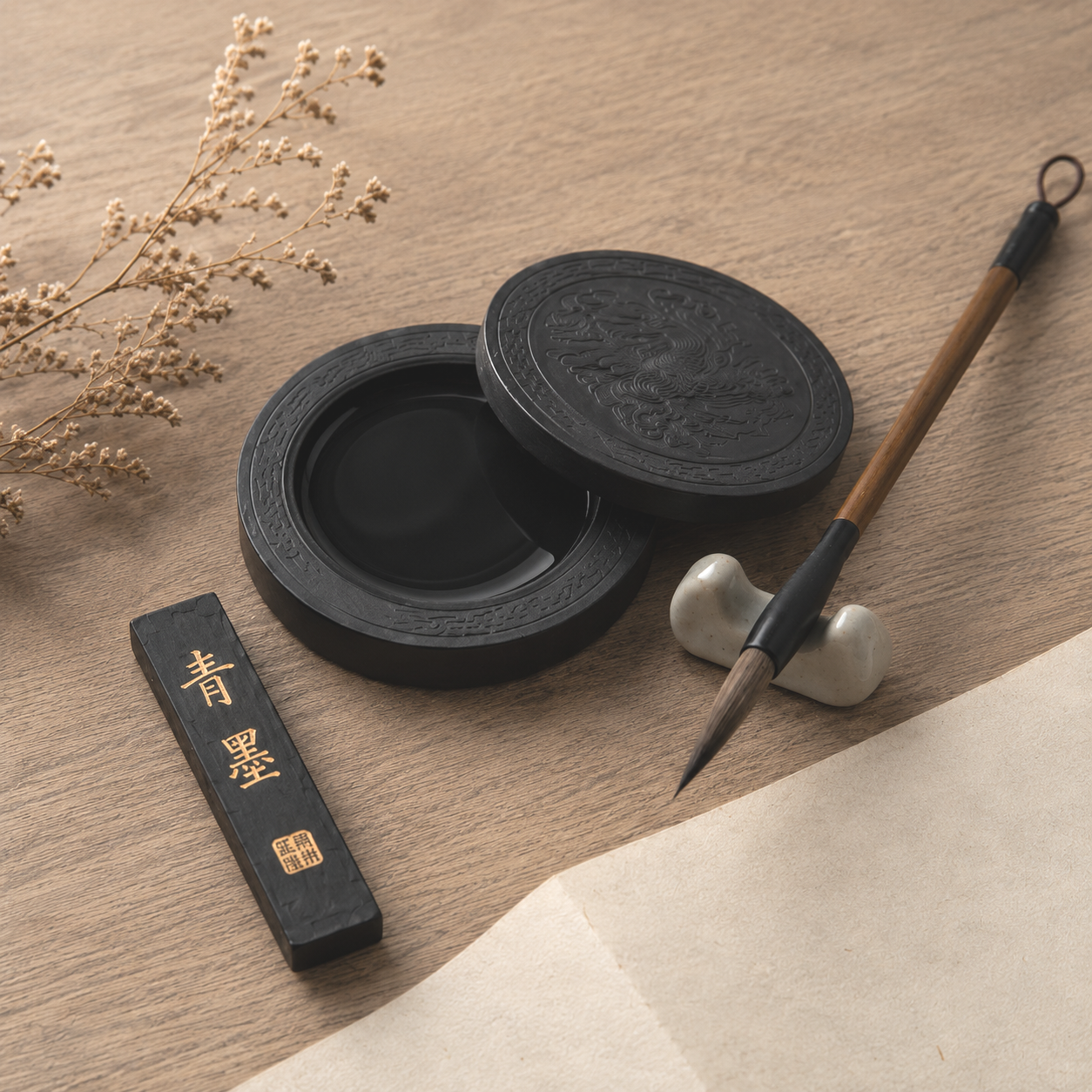
Before a single character appears on paper, Chinese calligraphy begins with quiet preparation.
The brush is chosen.
The paper is laid flat.
The ink is prepared.
The mind begins to settle.
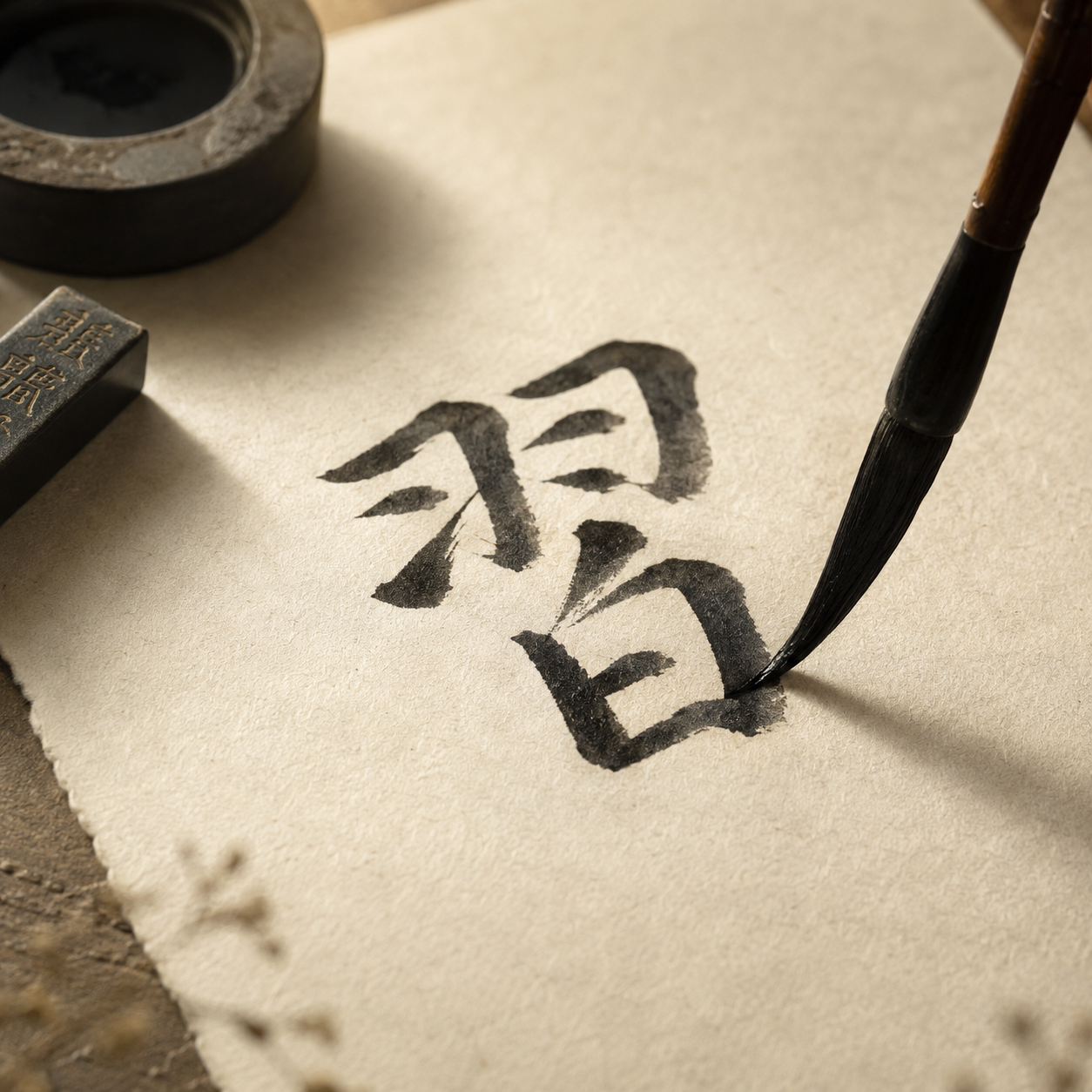
These four essential tools are traditionally known as The Four Treasures of the Study — 文房四寶wén fáng sì bǎo. They are the brush, ink, paper and inkstone.
For centuries, these tools have been used by Chinese calligraphers, painters and scholars. The Smithsonian National Museum of Asian Art describes them as the core instruments used to create Chinese painting and calligraphy: brush, inkstick, paper and inkstone.
But they are more than materials. Together, they create a ritual — a meeting between hand, breath, ink and intention.
1. The Brush 筆 — The Living Tool
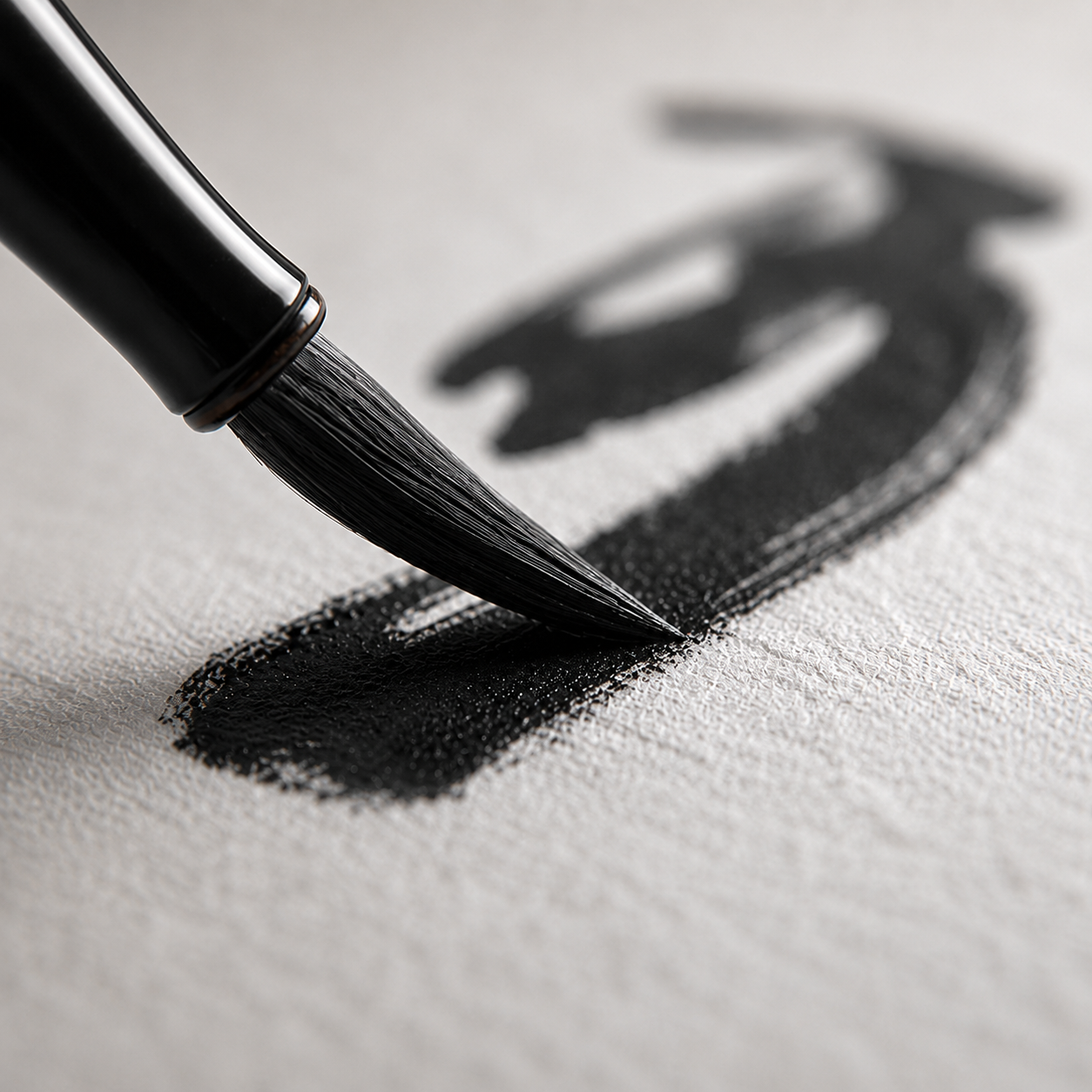
The brush is the heart of Chinese calligraphy.
Unlike a pen, which usually produces a fixed line, the Chinese brush responds to every small change in pressure, speed and angle. A single brushstroke can be thin or thick, dry or full, gentle or powerful.
This is why calligraphy is not only about writing a character correctly. It is also about revealing the movement behind it.
Traditional calligraphy brushes are usually made with animal hair and bamboo handles. Different brush hairs create different qualities. Some brushes are soft and absorbent, while others are firmer and more springy. The choice of brush affects how the ink flows, how the line opens and closes, and how much energy the stroke carries.
For beginners, the brush can feel unpredictable at first. But this is also its beauty.
It teaches patience.
It teaches sensitivity.
It teaches control.
2. The Ink 墨 — The Colour of Spirit
In Chinese calligraphy, ink is not simply “black.”
It can be deep, pale, dry, glossy, soft or textured. The feeling of the ink changes depending on how it is prepared, how much water is used, and how the brush carries it onto the paper.
Traditionally, ink comes in the form of an inkstick. The inkstick is gently ground with water on an inkstone to create liquid ink. Oxford’s Cabinet project describes the inkstick, inkstone, brush and paper as four basic tools used in China since ancient times for writing, drawing and painting.
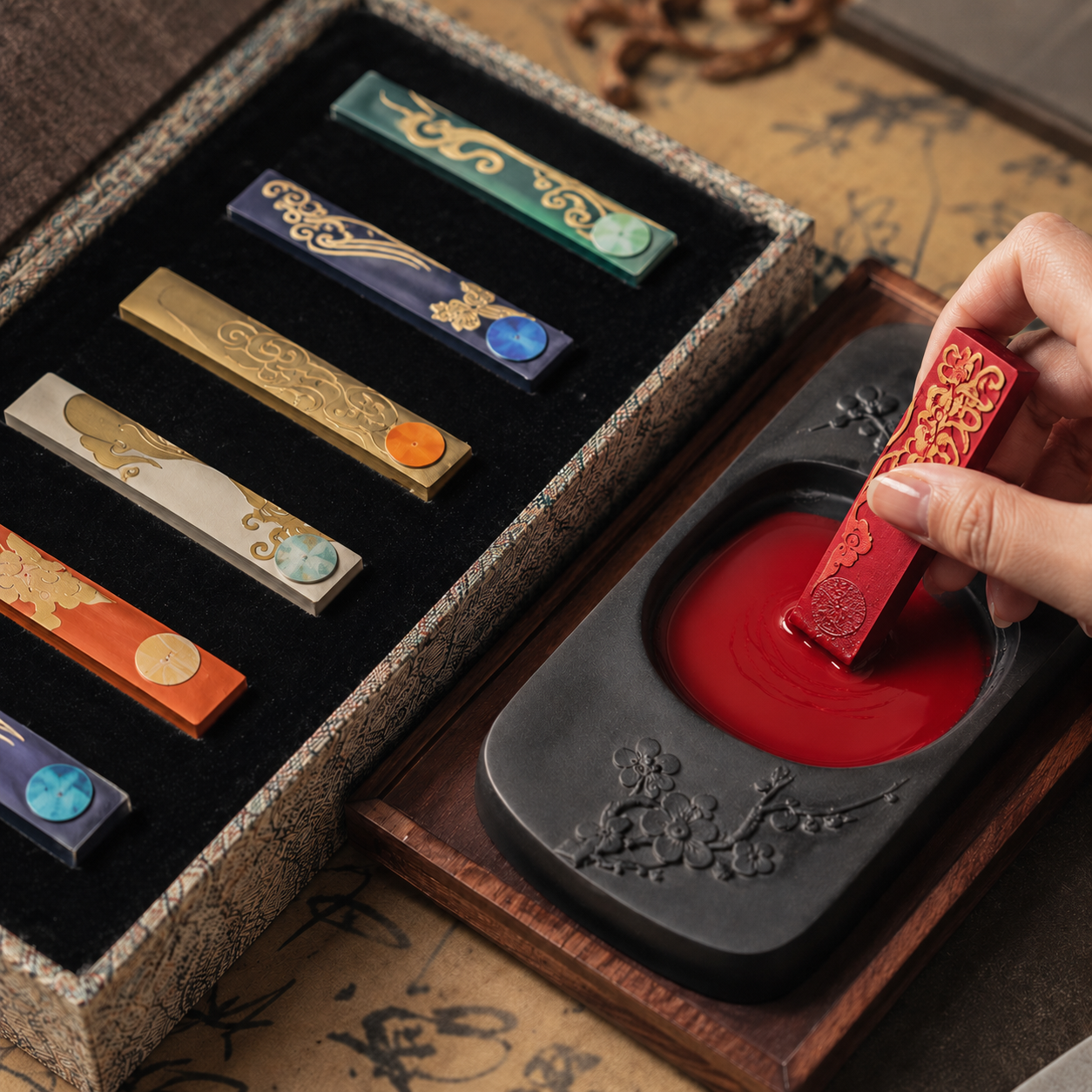
This process of grinding ink is part of the practice itself.
It slows the body down.
It prepares the hand.
It gives the mind time to arrive.
Today, many learners use bottled ink because it is convenient and practical. This is completely fine, especially for beginners. But understanding traditional ink helps us appreciate that calligraphy is not only about the final image.
It is also about the preparation before the first stroke.
3. The Paper 紙 — Where the Stroke Comes Alive
Paper is where the brushstroke reveals itself.
Different papers absorb ink in different ways. Some papers allow the ink to spread softly, while others hold the line more firmly. This changes the feeling of the character completely.
Many people casually call calligraphy paper “rice paper.” However, traditional Chinese calligraphy often uses Xuan paper 宣紙, which is known for its sensitivity to brush and ink. For beginners, practice paper with grid lines can be very helpful because it gives structure while the student learns balance and proportion.
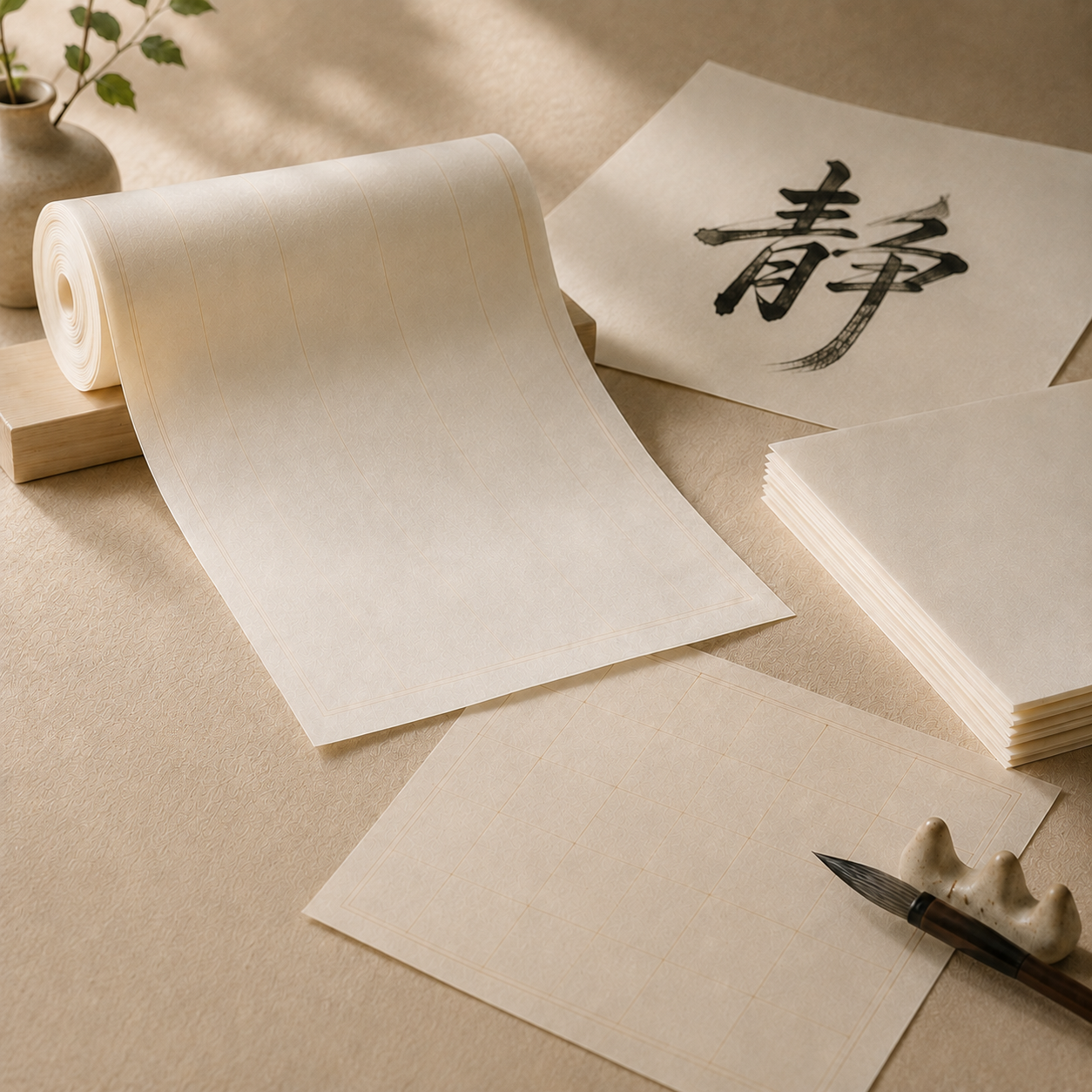
Paper is not passive.
It records hesitation.
It records confidence.
It records speed, pressure and stillness.
This is one reason Chinese calligraphy feels so alive. The paper does not hide the movement of the hand. It reveals it.
4. The Inkstone 硯 — The Quiet Foundation
The inkstone is used to grind the inkstick with water and hold the prepared ink.
At first glance, it may look like a simple object. But in traditional calligraphy, the inkstone has a quiet importance. It is where the ink is born before it meets the brush.
A good inkstone gives the right surface for grinding ink smoothly. It also becomes part of the calligrapher’s desk, not only as a practical tool but also as an object of appreciation.
The inkstone reminds us that calligraphy begins before writing.
It begins in preparation.
It begins in rhythm.
It begins in attention.
Together with the brush, ink and paper, the inkstone completes the traditional calligraphy ritual.
Why Are They Called “Treasures”?
The word “treasure” tells us something important.
These tools were never seen as ordinary stationery. In traditional Chinese culture, writing was deeply connected with education, self-cultivation and artistic expression.
The Metropolitan Museum of Art explains that calligraphy was the visual art form most highly prized in traditional China, and that painting and calligraphy shared the same essential tools: brush and ink.
Chinese calligraphy is also recognised by UNESCO as part of the Representative List of the Intangible Cultural Heritage of Humanity. UNESCO describes Chinese calligraphy as more than a tool for communication, recognising its artistic and cultural value.
So the Four Treasures are not only practical tools.
They carry a way of learning.
To slow down.
To observe.
To repeat.
To refine.
To express.
Do Beginners Need All Four Treasures?
Not necessarily.
A beginner can start with a simple brush, bottled ink, practice paper, a felt mat and a small ink dish. This is enough to experience the basic movement of Chinese calligraphy.
You do not need the most expensive brush.
You do not need rare paper.
You do not need a collector’s inkstone.
What matters most in the beginning is learning how the brush moves, how the ink responds, and how your hand connects with the paper.
However, learning about the Four Treasures gives beginners a deeper understanding of the tradition. It helps us see that calligraphy is not just handwriting.
It is a practice of posture, breath, focus and rhythm.
Over time, students may naturally begin to explore different brushes, papers and inks. Each material changes the writing experience. This is part of the journey.
A Simple Way to Begin
For your first practice, prepare only a few things:
A medium calligraphy brush.
Black ink.
Practice paper.
A felt mat.
A quiet table.
Before writing, take a moment to settle your hand and breath.
Dip the brush lightly into the ink. Let the tip touch the paper. Try one slow horizontal stroke.
Do not rush to make it beautiful.
Notice how the brush responds.
Notice how the ink spreads.
Notice how your hand feels.
This is where calligraphy begins — not with perfection, but with attention.
Final Thought
The Four Treasures of Chinese Calligraphy — brush, ink, paper and inkstone — may seem simple at first.
Yet together, they open a doorway into one of China’s most refined artistic traditions.
Each tool teaches something different.
The brush teaches movement.
The ink teaches depth.
The paper teaches sensitivity.
The inkstone teaches patience.
And when they come together, writing becomes more than words.
It becomes practice.
Sources & Further Reading
Smithsonian National Museum of Asian Art — The Four Treasures
The Metropolitan Museum of Art — Chinese Calligraphy
UNESCO Intangible Cultural Heritage — Chinese Calligraphy
Oxford Cabinet — The Four Treasures of the Study
