
7 MIN READ
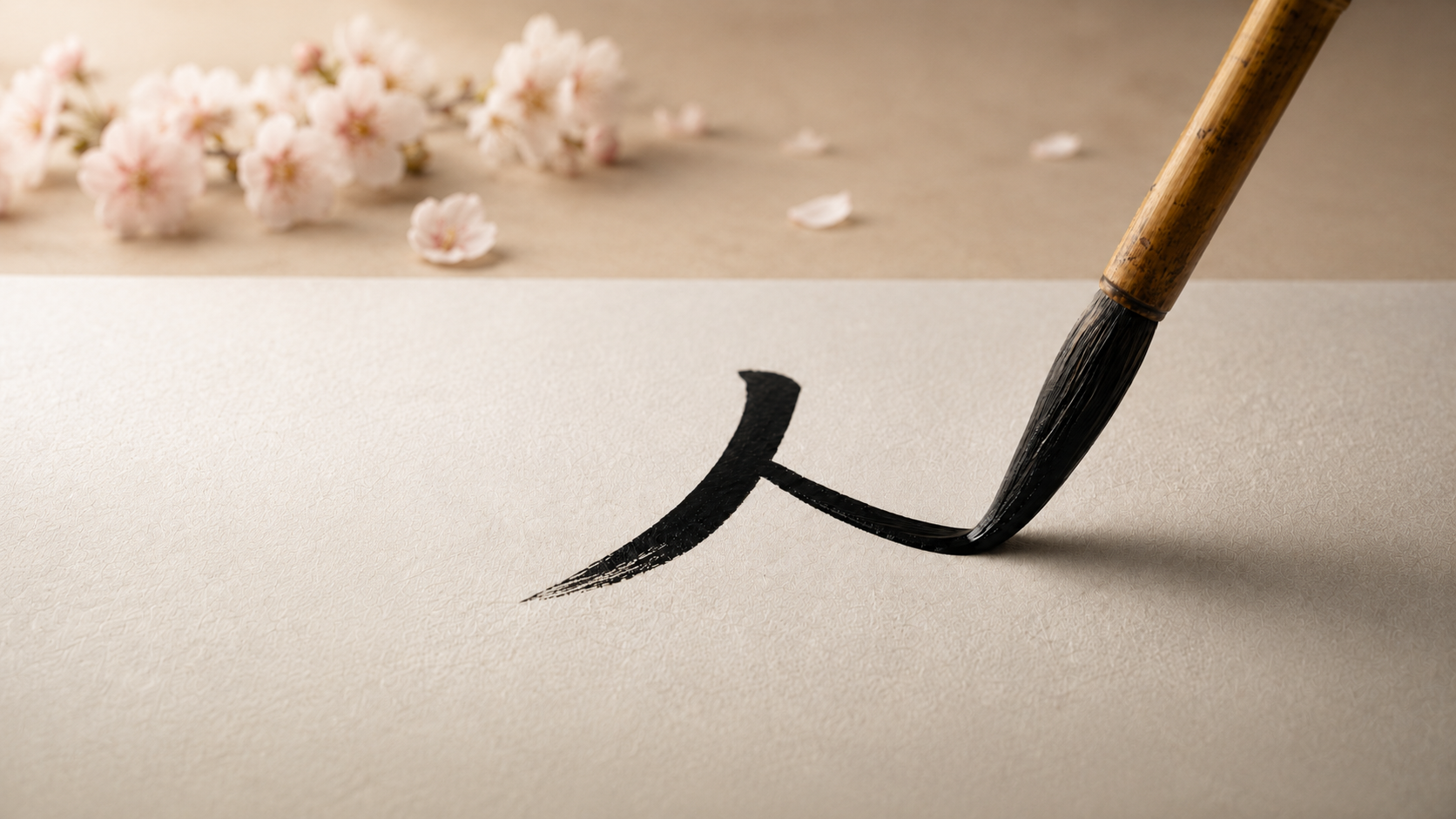
At first glance, a brushstroke may look simple.
A line of black ink.
A mark on paper.
A beginning and an end.
But in Chinese calligraphy, a stroke is never just a line.
It carries movement.
It holds pressure.
It records hesitation and confidence.
It reveals the rhythm of the hand.
This is why two people can write the same character, with the same brush and the same ink, yet the result can feel completely different.
One stroke may feel stiff.
Another may feel light.
Another may seem to breathe.
So what makes a Chinese calligraphy stroke feel alive?
A Stroke Begins Before It Touches the Paper
In Chinese calligraphy, the stroke does not begin only when the brush touches the paper.
It begins earlier — in the posture, the breath, the focus of the hand, and the intention of the movement.
The Metropolitan Museum of Art describes Chinese calligraphy as a form in which each brushstroke is shaped through a complex series of brush movements, then brought together into a dynamically balanced whole. This means the beauty of calligraphy is not only in the finished character, but also in the movement that created it.
Before writing, the calligrapher must prepare the body.
The shoulder relaxes.
The wrist becomes alert.
The brush is lifted.
The mind becomes quiet.
Only then does the stroke begin.
Pressure: The Weight of the Stroke
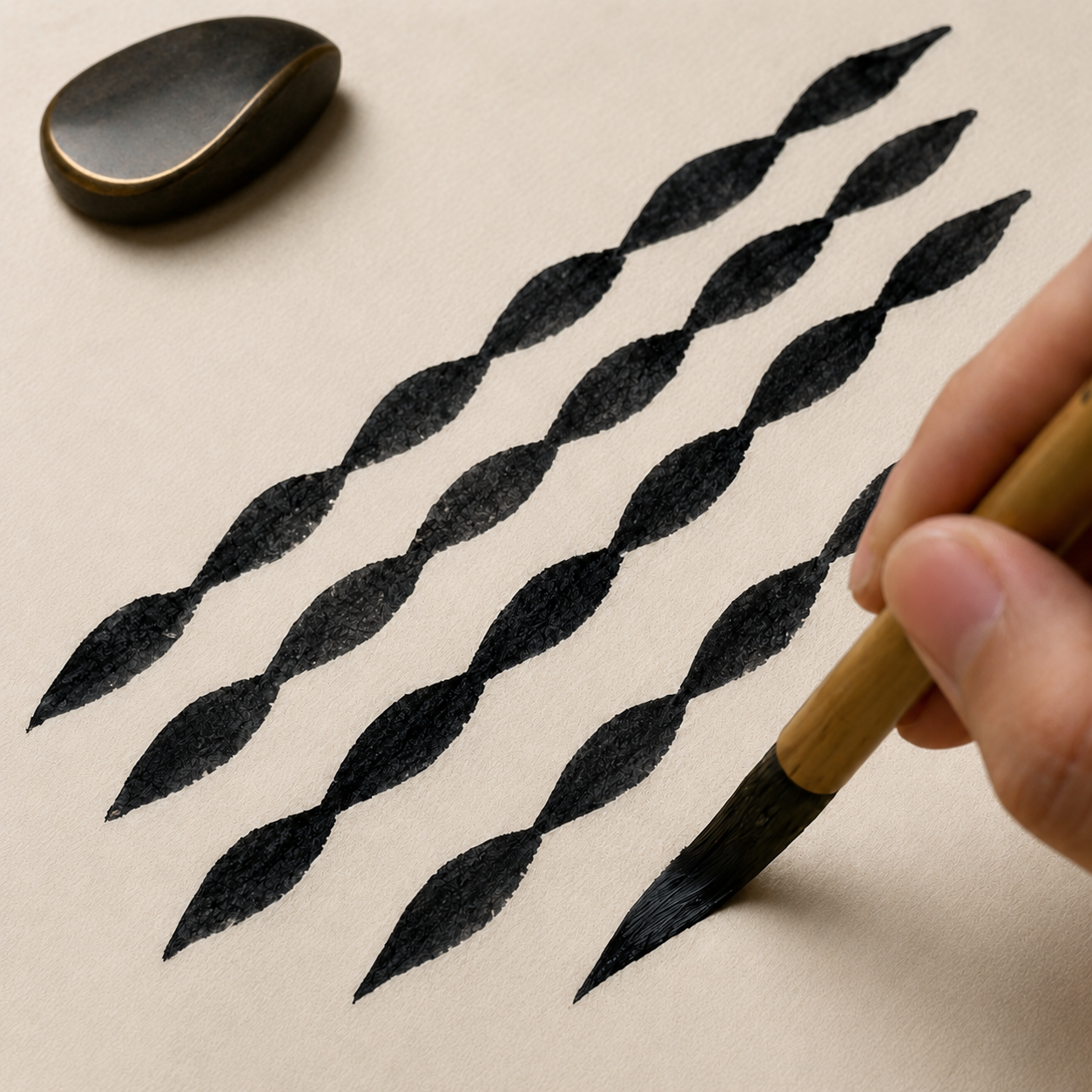
One of the first things that gives a stroke life is pressure.
When the brush presses down, the stroke becomes thicker and fuller. When the brush lifts, the line becomes lighter and thinner. This change creates movement inside the stroke.
A lively stroke is rarely flat from beginning to end. It has weight, release and transition.
It may begin with strength.
It may soften in the middle.
It may finish with a quiet lift.
This is very different from writing with a pen. A pen often produces a more fixed line, while the Chinese brush responds to the smallest changes in pressure and angle. Smarthistory explains that the pliant brush can register subtle changes in pressure, direction and speed as force moves from the body through the hand and into the brush.
This is why the brush feels alive. It does not simply obey. It responds.
Speed: The Rhythm of the Hand
A stroke also carries speed.
A slow stroke may feel calm, heavy and controlled.
A faster stroke may feel energetic, spontaneous or light.
Neither is automatically better. What matters is whether the speed matches the intention of the character and the structure of the stroke.
The Asian Art Museum explains that rhythm and flow in Chinese calligraphy are controlled through character size, contrast between light and dark, and the speed of application. In more formal scripts, the brush is placed carefully and moved with deliberation; in more spontaneous forms, it may move with greater speed and freedom.
This is why calligraphy often feels close to dance.
The brush pauses.
Turns.
Presses.
Lifts.
Continues.
The stroke is not only seen. It is felt.
Direction: The Path of Energy
A living stroke has direction.
Even when the stroke is still on the page, the eye can sense where it came from and where it is going.
Some strokes move with firmness.
Some curve with softness.
Some turn sharply.
Some fade gently.
The direction of the brush gives the stroke its inner path. Without direction, a stroke can feel dull or disconnected. With direction, it feels as if the ink still remembers the movement that placed it there.
This is one of the reasons Chinese calligraphy is often described as more than beautiful writing. The Smithsonian National Museum of Asian Art notes that Chinese calligraphy has developed through multiple script styles over more than three thousand years, each with its own appearance and expressive character.
Different scripts move differently. A standard script stroke may feel grounded and clear. A running script stroke may feel continuous and flowing. A cursive stroke may feel free, swift and expressive.
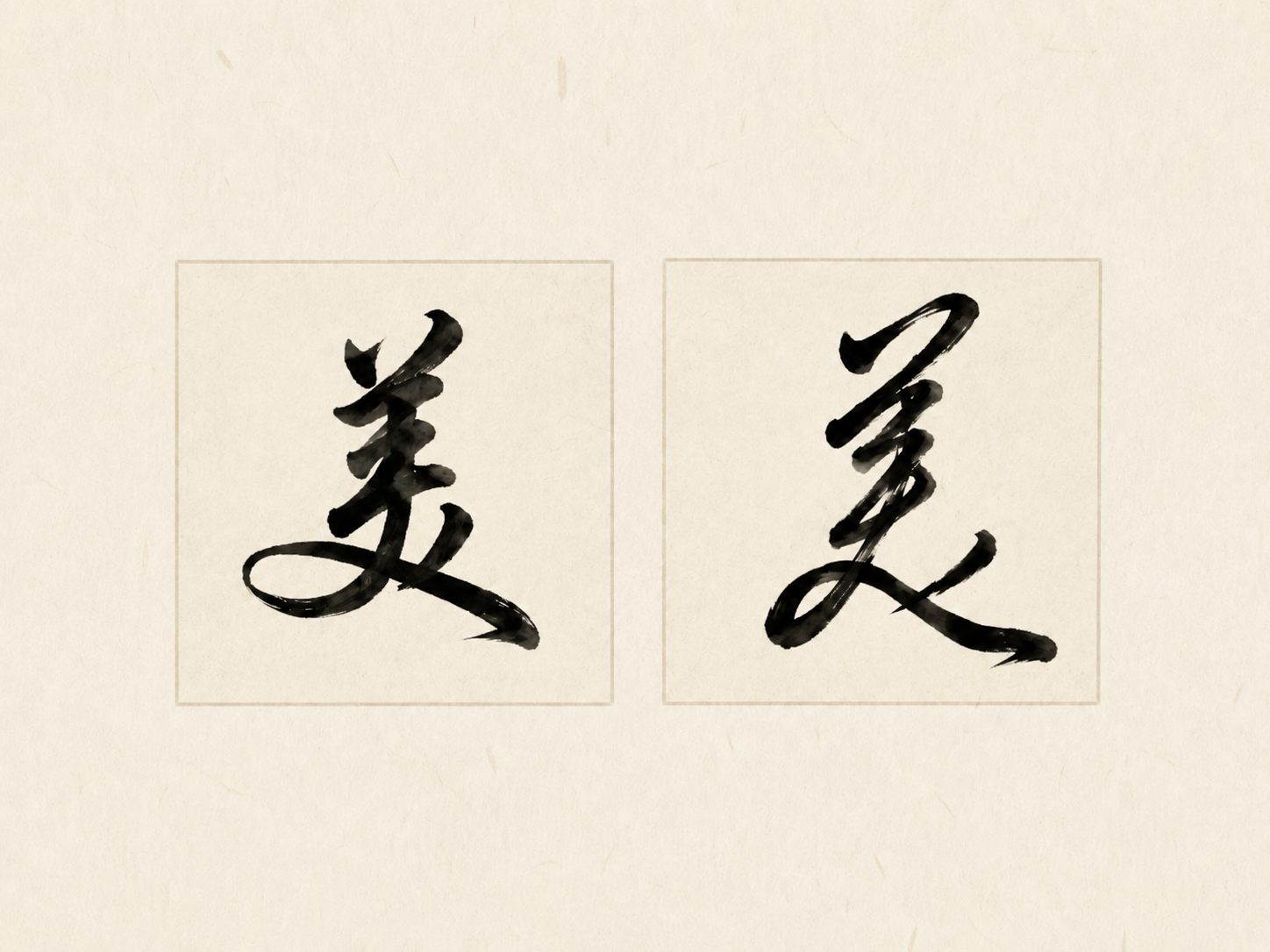
The character 美, meaning beauty, written in two different script styles to show how structure, rhythm, and movement change through the brush.
Ink: The Breath Within the Line
Ink gives a stroke depth.
A stroke can be dark and saturated.
It can be pale and dry.
It can spread softly into the paper.
It can leave textured traces as the brush begins to run out of ink.
This variation is not a mistake. It is part of the expression.
In traditional Chinese art, brush and ink are central to the life of the image. The Asian Art Museum explains that brushwork is essential in Chinese painting, and that the quality of the brushwork captures qiyun — often translated as spirit resonance or the living energy of the work.
Although this idea is often discussed in painting, it also helps us understand calligraphy. A calligraphy stroke should not feel mechanically filled in. It should carry energy through ink.
The ink tells us something.
Was the brush full?
Was it becoming dry?
Was the hand steady?
Was the movement fast or slow?
The stroke remembers.
Paper: Where the Stroke Reveals Itself
Paper plays a quiet but powerful role.
On some papers, ink spreads gently. On others, the stroke remains sharper and more controlled. This changes the feeling of the writing completely.
A very absorbent paper may show the softness of the brush and the moisture of the ink. A less absorbent paper may preserve the edge of the stroke more clearly. Beginner practice paper with grid lines can also help students understand proportion and balance before moving into freer writing.
This is why paper is not just a background.
It is where the stroke reveals itself.
The paper records the moment: the pressure, the speed, the pause, the lift. It does not hide the movement of the brush. It shows it.
Structure: Freedom Needs Form
A stroke may feel alive, but it still needs structure.
In Chinese calligraphy, strokes are not placed randomly. Chinese characters are made from strokes written in a certain order, and this order helps build balance and rhythm. The Asian Art Museum explains that Chinese characters are made up of strokes written in prescribed order depending on the script, often moving from top to bottom and left to right.
For beginners, this is very important.
A lively stroke does not mean careless writing.
A free stroke does not mean uncontrolled writing.
The more disciplined the foundation, the more natural the expression becomes.
This is one of the beautiful paradoxes of calligraphy: freedom grows from repeated practice.
Intention: The Quiet Inner Quality
Perhaps the most difficult part to describe is intention.
A technically correct stroke can still feel empty.
A simple stroke can feel full of life.
Why?
Because a living stroke carries the presence of the person who made it.
It shows whether the hand was tense or relaxed.
Whether the breath was rushed or calm.
Whether the movement was forced or natural.
The Encyclopaedia Britannica notes that Chinese painting is judged by criteria similar to calligraphy, especially the vitality and expressiveness of the brushstroke and the harmonious rhythm of the whole composition.
This is also true in calligraphy practice.
A stroke is not alive because it is dramatic.
It is alive because it is connected.
Connected to the body.
Connected to the breath.
Connected to the brush.
Connected to the moment.
How Beginners Can Practise a More Alive Stroke
For beginners, the goal is not to make every stroke beautiful immediately.
The goal is to start feeling the difference.
Try practising one simple horizontal stroke several times.
Write it once very slowly.
Write it once with too much pressure.
Write it once with almost no pressure.
Write it once while breathing calmly.
Write it once while rushing.
Then look carefully.
Which stroke feels heavy?
Which one feels nervous?
Which one feels stable?
Which one feels more alive?
This kind of observation is the beginning of calligraphy practice.
Not copying blindly.
Not chasing perfection.
But learning to see.
Final Thought
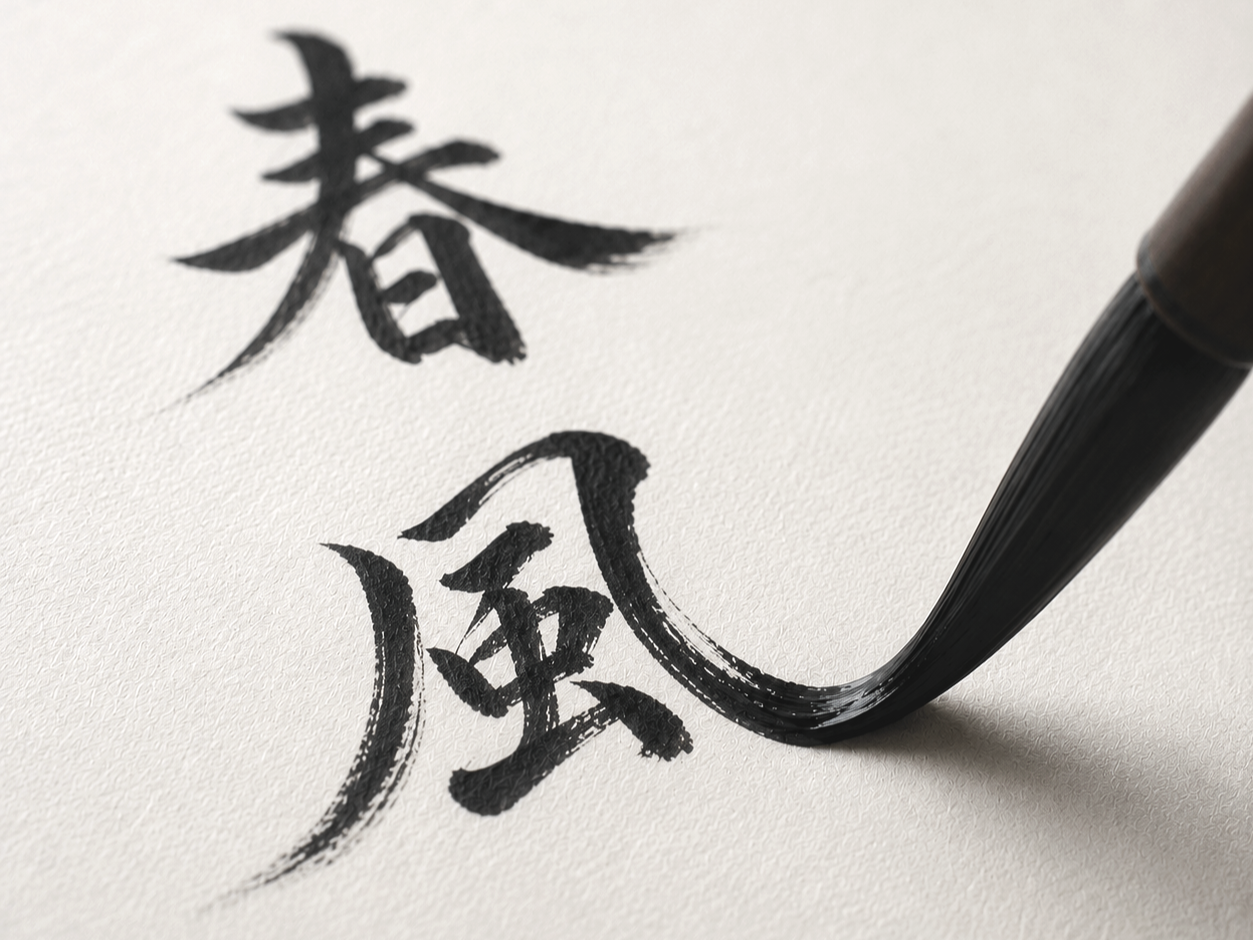
A brush writes 春風, the “spring breeze,” in a moment of quiet movement.
A living stroke is not created by decoration.
It comes from the relationship between brush, ink, paper and body.
The brush gives movement.
The ink gives depth.
The paper gives response.
The body gives rhythm.
The mind gives intention.
Together, they turn a simple line into something more than writing.
They turn it into practice.
Sources & Further Reading
The Metropolitan Museum of Art — Chinese Calligraphy
Smithsonian National Museum of Asian Art — China’s Calligraphic Arts
Asian Art Museum — An Introduction to Chinese Character and Brushstrokes
Asian Art Museum — An Introduction to Chinese Calligraphy
Smarthistory — Chinese Calligraphy, an Introduction
Encyclopaedia Britannica — The Role of Calligraphy in Chinese Art
