
8 MIN READ
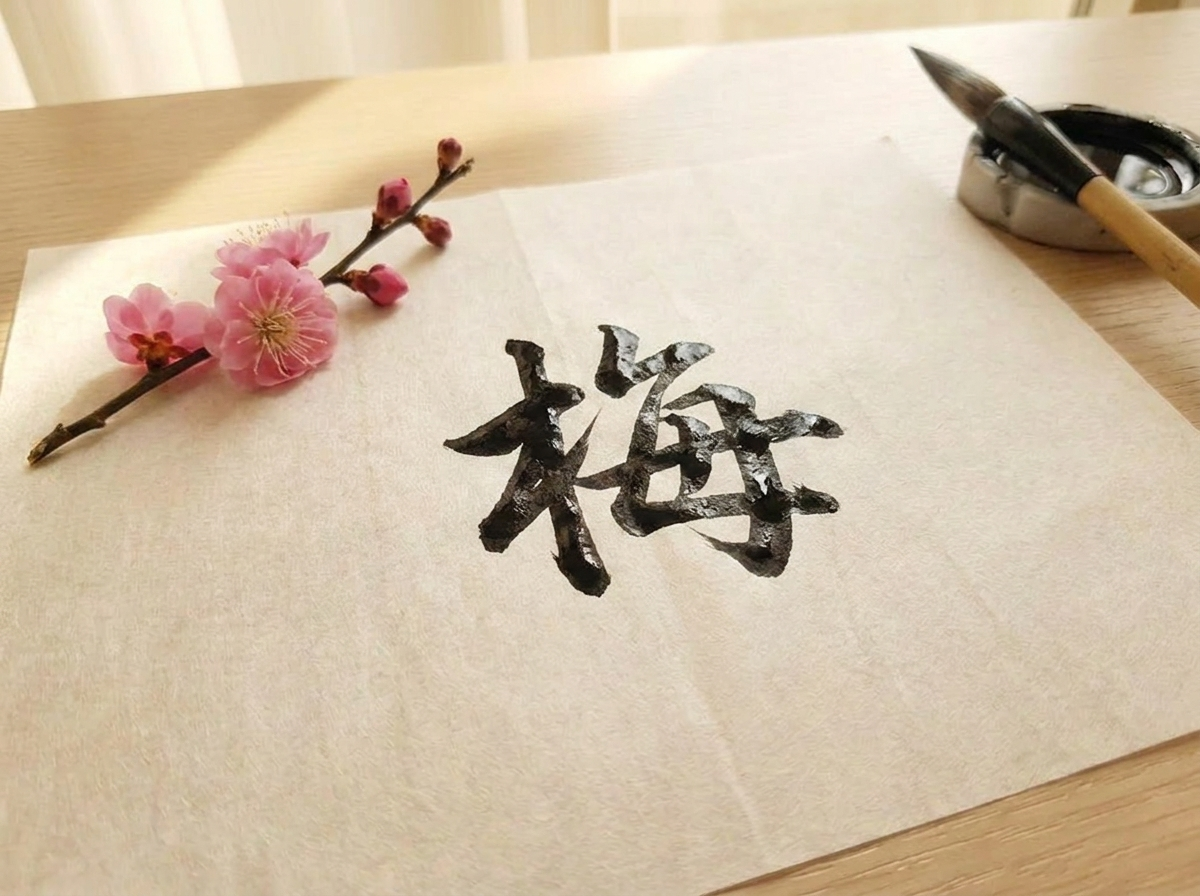
Plum Blossom (梅)
Chinese calligraphy is often described as the art of writing.
But it is also an art of noticing.
The weight of a brushstroke.
The dryness of ink.
The openness of space.
The quietness between one movement and the next.
In traditional Chinese culture, the seasons are not only changes in weather. They are changes in mood, rhythm and energy. Spring opens. Summer expands. Autumn clarifies. Winter returns to stillness.
These qualities can also be felt in calligraphy.
A single stroke may carry the freshness of spring, the fullness of summer, the sharpness of autumn, or the quiet depth of winter.
This is why Chinese calligraphy is never only about writing words beautifully. It is also a way of seeing the world more carefully.
Nature, Poetry and the Brush
Chinese calligraphy has long been connected with poetry and painting.
In traditional Chinese art, these three forms are often closely related. The National Gallery of Victoria explains that poetry, calligraphy and painting were cultivated in China as interconnected arts and vehicles of self-expression. Painting was often regarded as “silent poetry,” while poetry could be seen as “painting with sound.”
This matters because many seasonal feelings in Chinese art are expressed through poetry.
A poem about spring rain, autumn wind or winter plum blossom is not only a description of nature. It is also a reflection of the inner state of the writer.
When such words are written in calligraphy, the brush gives them another layer of life.
The poem gives meaning.
The ink gives atmosphere.
The brush gives movement.
Together, they create feeling.
Spring: Opening and Movement
Spring is often associated with renewal.
New leaves appear. Flowers open. Wind becomes softer. The body naturally feels more awake after winter.
In calligraphy, a spring-like stroke may feel light, moving and fresh. It may carry a sense of opening — not too heavy, not too rigid, but full of beginning.
A character such as 春chūn, meaning “spring,” can be written with a sense of gentle expansion. The strokes can feel as if they are unfolding.
Spring calligraphy does not need to be delicate in a weak way. It can still have structure and strength. But its energy often feels alive and forward-moving.
Like the first movement of a branch after rain.
Summer: Fullness and Abundance
Summer has a different quality.
It is fuller, warmer and more outward. In nature, the energy is visible everywhere: leaves are dense, flowers are open, light is strong, and everything feels more complete.
In calligraphy, a summer-like stroke may feel rich and saturated.
The ink may be darker.
The brush may press more fully.
The lines may feel rounder and more generous.
A summer character might carry warmth, confidence and abundance. The brush does not rush. It settles into the paper with presence.
This is one of the beautiful things about calligraphy: the same brush can express many kinds of energy depending on how it is used.
Autumn: Clarity and Release
Autumn often brings a feeling of clarity.
The air becomes cooler. Leaves begin to fall. Forms become more visible as nature starts to simplify.
In calligraphy, autumn can be expressed through cleaner lines, sharper turns and more open space.
The stroke may become less full than summer, but more refined. It may carry a sense of release — as if unnecessary weight has been removed.
A dry-brush texture can feel especially autumnal. When the brush begins to run out of ink, the paper shows broken traces inside the stroke. These marks can feel fragile, honest and expressive.
Autumn reminds us that beauty is not always about fullness.
Sometimes beauty appears through restraint.
Winter: Stillness and Inner Strength
Winter is often the season of quiet.
Trees lose their leaves. The world becomes simpler. Movement slows down.
But winter is not empty. Beneath the stillness, there is hidden strength.
In Chinese art, winter is often associated with endurance. Plants such as plum blossom, pine and bamboo are deeply symbolic because they remain beautiful or resilient in cold conditions. The Cleveland Museum of Art describes a Ming dynasty handscroll, Flowers of Four Seasons, with Poems, in which flowers are arranged by season: narcissus and peony for early spring, lotus for summer, chrysanthemum for autumn, and plum with evergreen bamboo for winter.
In calligraphy, winter may appear as a slower, quieter stroke.
The ink may be deep.
The movement may be restrained.
The form may feel simple but strong.
Winter calligraphy does not need to be dramatic. Its power can come from silence.
A stroke can be alive without being loud.
The Same Character, Different Seasons
One of the most interesting ways to understand calligraphy is to write the same character in different moods.
Take a simple character such as 人rén, meaning “person.”
Written with a spring feeling, it may be light and rising.
Written with a summer feeling, it may be full and grounded.
Written with an autumn feeling, it may become sharper and more spacious.
Written with a winter feeling, it may be quiet, dark and contained.
The character remains the same.
But the feeling changes.
This is why calligraphy is not only about copying form. It is about learning how movement, rhythm, ink and space can change the emotional quality of writing.
The brush becomes a way to study both the character and oneself.
Seasonal Words in Calligraphy
Seasonal words are especially beautiful for calligraphy practice because they carry both visual and emotional meaning.
Here are a few simple examples:
春 — spring
夏 — summer
秋 — autumn
冬 — winter
風 — wind
雨 — rain
花 — flower
月 — moon
雪 — snow
竹 — bamboo
梅 — plum blossom
These characters are not only vocabulary. They invite feeling.
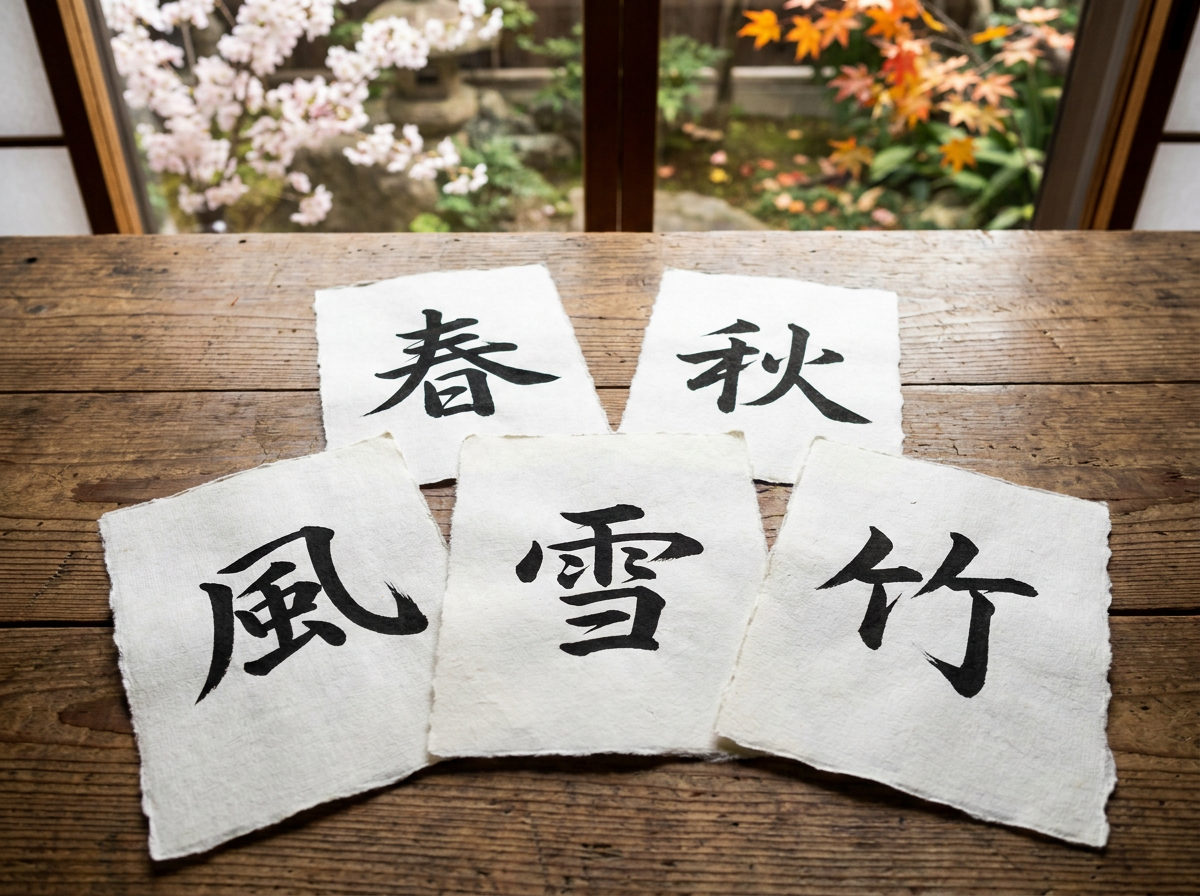
A character like 風 can suggest movement.
A character like 雪 can suggest silence.
A character like 竹 can suggest uprightness.
A character like 梅 can suggest resilience.
When beginners practise seasonal characters, they begin to understand that calligraphy is not only mechanical. It is expressive.
Calligraphy as a Seasonal Practice
Calligraphy can also follow the rhythm of the year.
In spring, you may practise lighter, more flowing strokes.
In summer, fuller and more confident lines.
In autumn, cleaner structure and dry-brush texture.
In winter, slower writing and deeper stillness.
This does not mean there are strict rules.
It simply means that practice can become more connected to life.
The Smithsonian has noted that exhibitions on Chinese and Japanese seasonal art explore how seasonal themes shaped landscapes, activities and poetic imagination. In calligraphy, this same sensitivity can be brought into the movement of the brush.
The calligrapher does not write outside nature.
The calligrapher writes with it.
A Simple Practice to Try
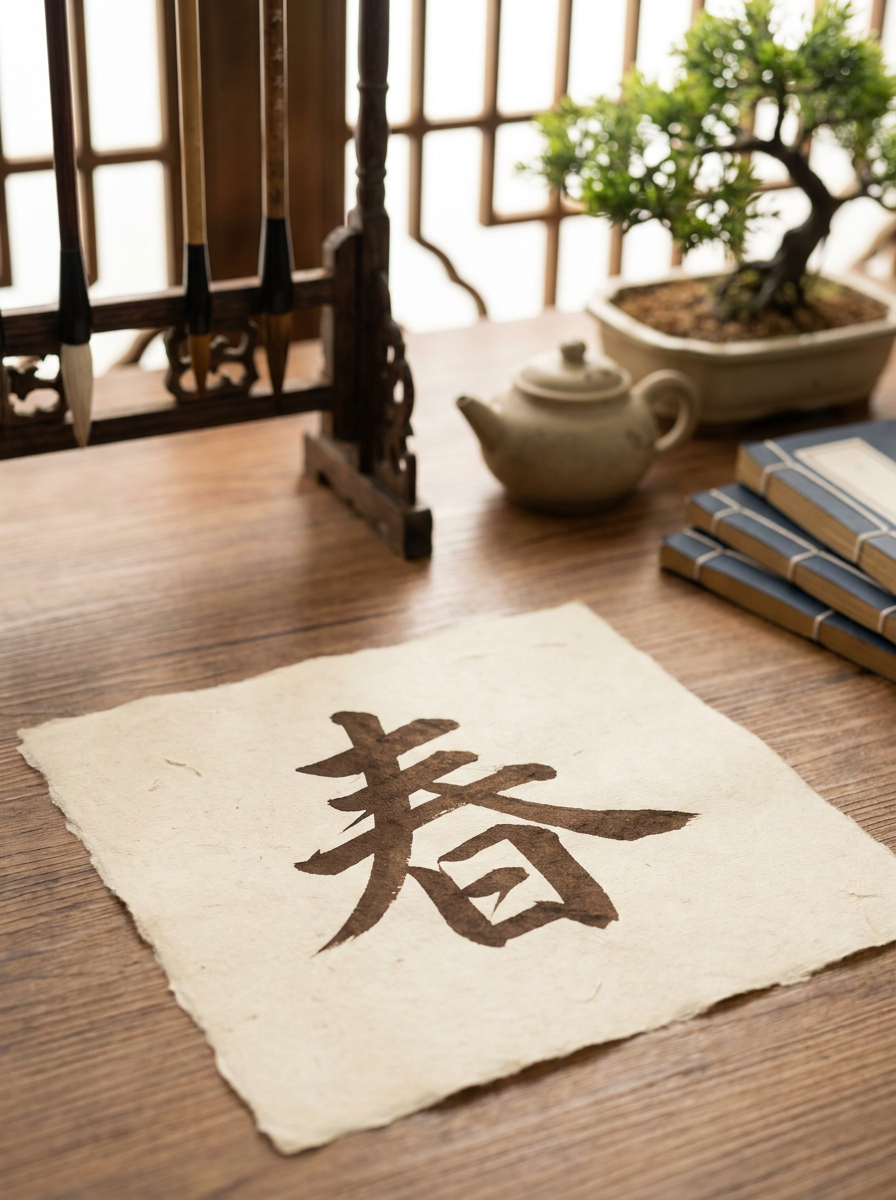
Choose one seasonal character. For example:
春 — spring
Write it once slowly.
Write it once with a lighter feeling.
Write it once with fuller ink.
Write it once with more space between the strokes.
Then look again.
Which version feels fresh?
Which version feels heavy?
Which one feels more alive?
Which one feels closest to the season?
This kind of practice helps us move beyond simply asking, “Is it correct?”
Instead, we begin to ask:
“What does it feel like?”
That question is where calligraphy becomes deeper.
Final Thought
The seasons teach us that beauty is always changing.
Spring opens.
Summer expands.
Autumn releases.
Winter gathers.
Chinese calligraphy carries the same truth.
A stroke can be light or heavy.
Full or dry.
Fast or slow.
Quiet or expressive.
Through the brush, we begin to see that writing is not separate from nature.
It follows rhythm.
It carries atmosphere.
It changes with the hand, the breath and the moment.
And perhaps this is why calligraphy continues to feel so alive.
It reminds us to move with the seasons.
Sources & Further Reading
National Gallery of Victoria — Three Perfections: Poetry, Calligraphy and Painting in Chinese Art
Cleveland Museum of Art — Flowers of Four Seasons, with Poems
Smithsonian Institution — Seasons Exhibitions Celebrate the Importance of Seasons in Chinese and Japanese Art
The Metropolitan Museum of Art — Words and Images: Chinese Poetry, Calligraphy, and Painting
