
4 MIN READ
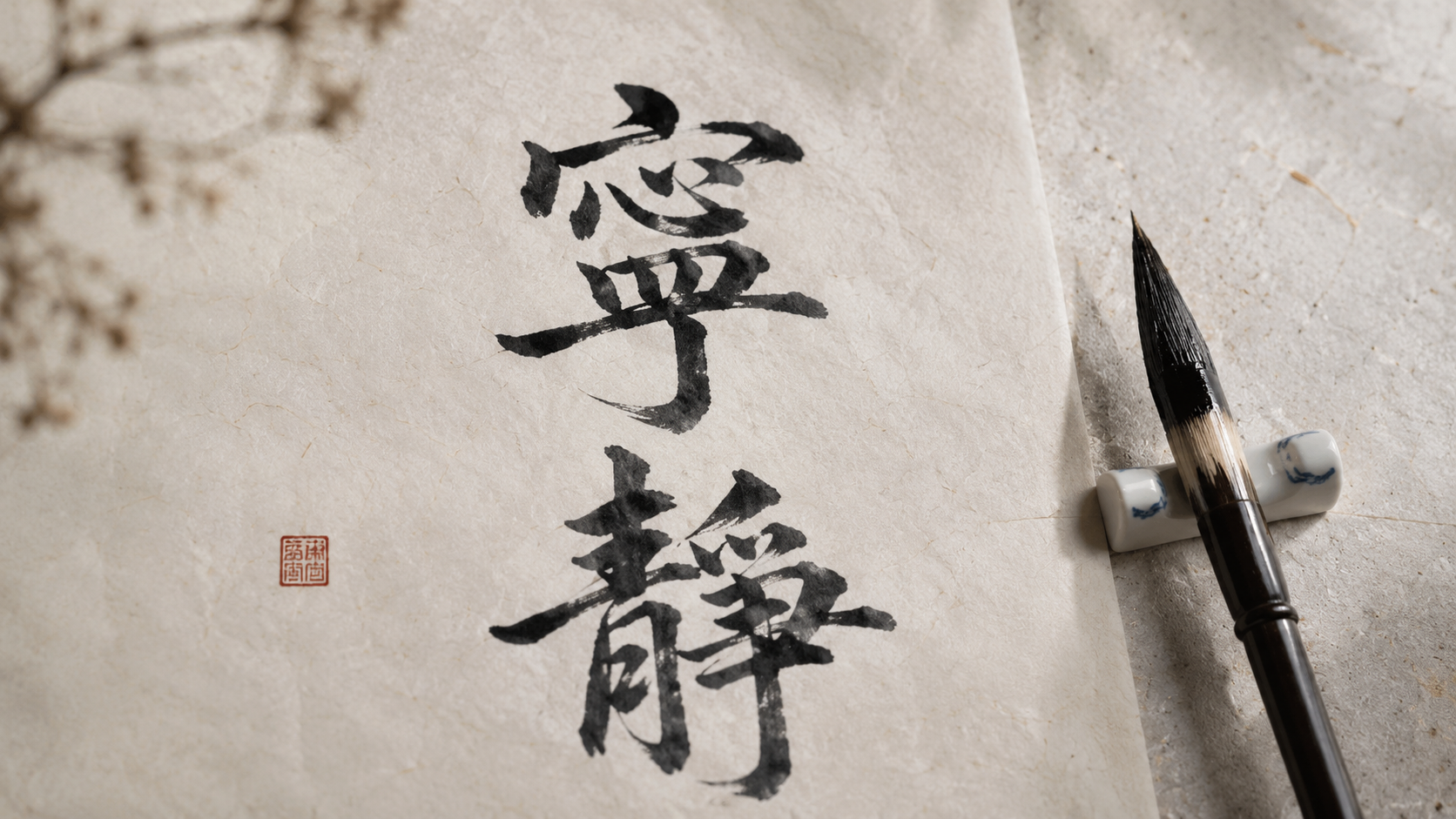
Some Chinese words are not only read.
They are felt.
寧靜níng jìng can be translated as peaceful stillness, serenity, or inner quiet. It describes a state of calm that is not empty or passive. It is a quietness that allows the mind to become clear and steady.
This is why 寧靜 is such a beautiful phrase for Chinese calligraphy.
It does not ask for dramatic movement.
It does not ask for decoration.
It asks for presence.
In calligraphy, peaceful stillness is not only an idea. It can be seen in the way a brush is held, the way ink settles into paper, and the way each stroke arrives without rushing.
寧 — A Sense of Settling
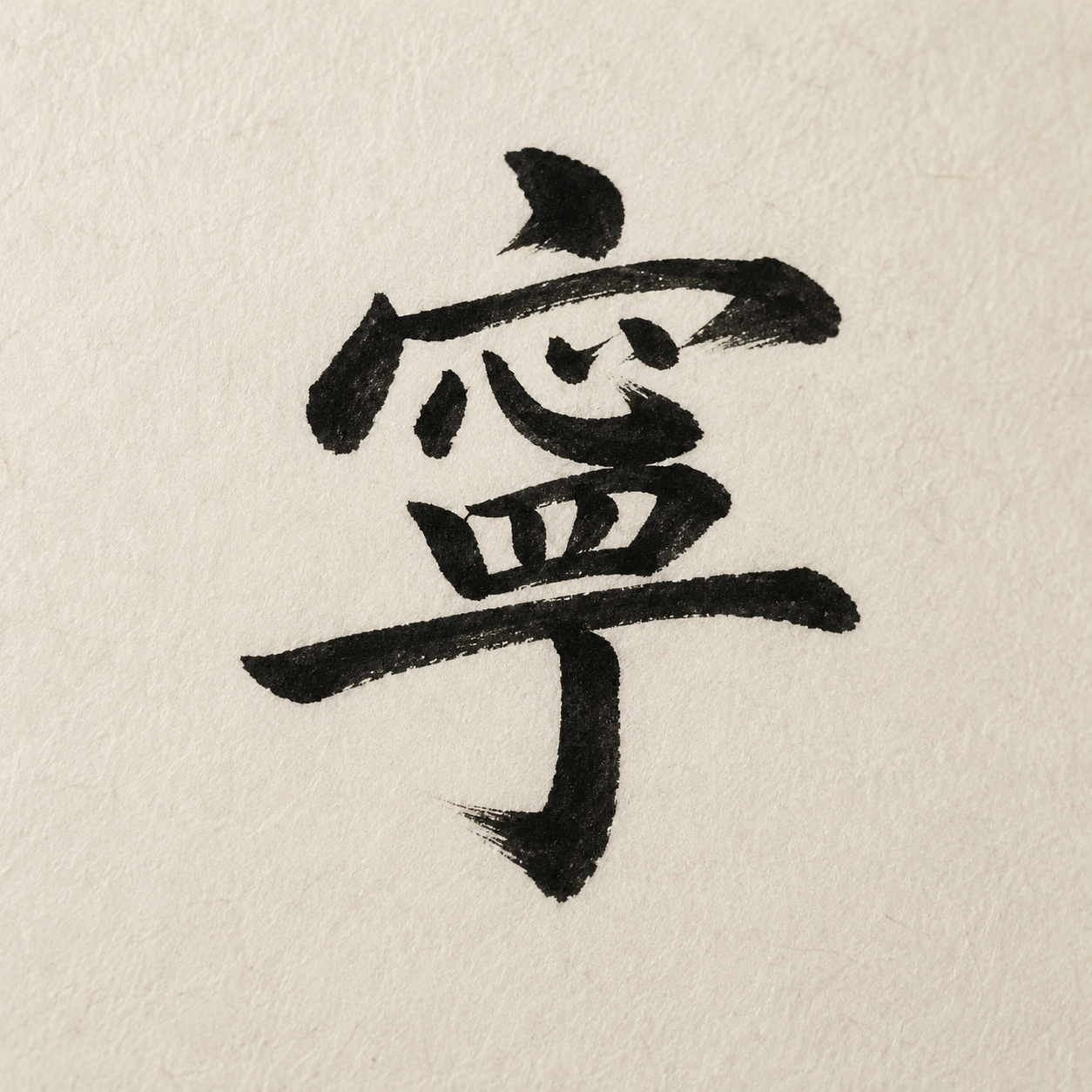
The first character, 寧, carries the feeling of peace, calm and settling.
Visually, it is a structured character. It has a sense of shelter and containment. When written carefully, it can feel composed and grounded, as if the movement of the brush has gathered into one clear form.
For beginners, 寧 can be a good reminder that calmness does not mean weakness.
A calm stroke still needs structure.
A peaceful line still needs direction.
A quiet character still needs strength.
This is one of the lessons of calligraphy: softness and discipline are not opposites. They support each other.
靜 — Stillness with Life Inside
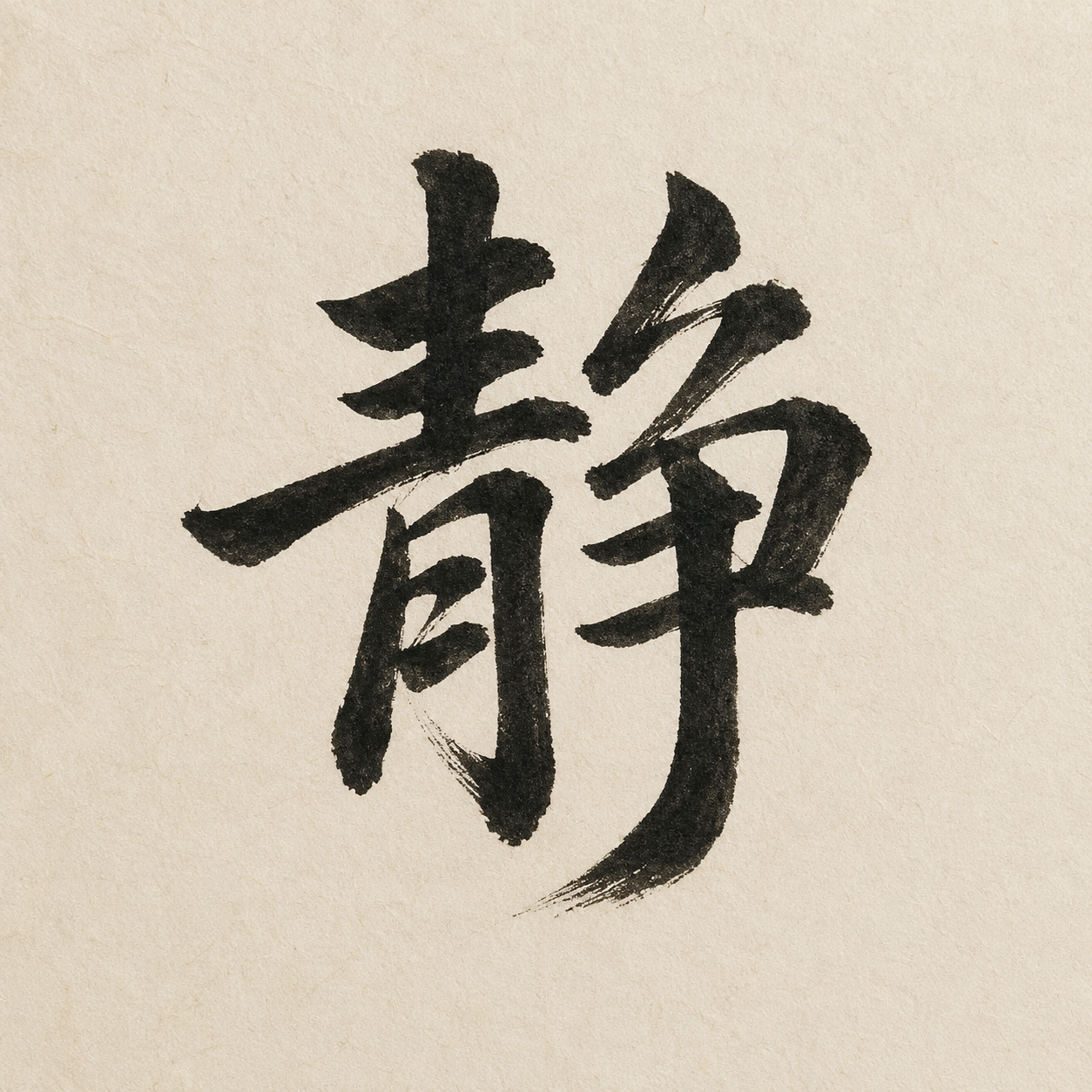
The second character, 靜, means stillness, quietness or calm.
But stillness in calligraphy is not lifeless.
A stroke can be still and yet full of movement.
A character can be quiet and yet full of energy.
A piece can feel simple and yet deeply present.
When writing 靜, the brush should not feel frozen. It should feel settled. The movement is controlled, but not stiff. The ink is calm, but not flat.
This is the difference between stillness and emptiness.
Stillness has life inside it.
Why 寧靜 Matters in Calligraphy Practice
Chinese calligraphy asks the body to slow down.
The shoulder softens.
The wrist becomes aware.
The breath becomes more even.
The brush touches the paper.
In that moment, the condition of the body becomes visible.
If the hand is tense, the line may feel hard.
If the breath is rushed, the stroke may feel unsettled.
If the mind is distracted, the writing may lose rhythm.
This does not mean calligraphy must be perfect. In fact, the practice becomes more meaningful when we stop chasing perfection and begin observing more carefully.
A stroke can show us how we are holding ourselves.
This is why 寧靜 is not only a phrase to write. It is also a quality to practise.
A Classical Idea of Inner Quiet
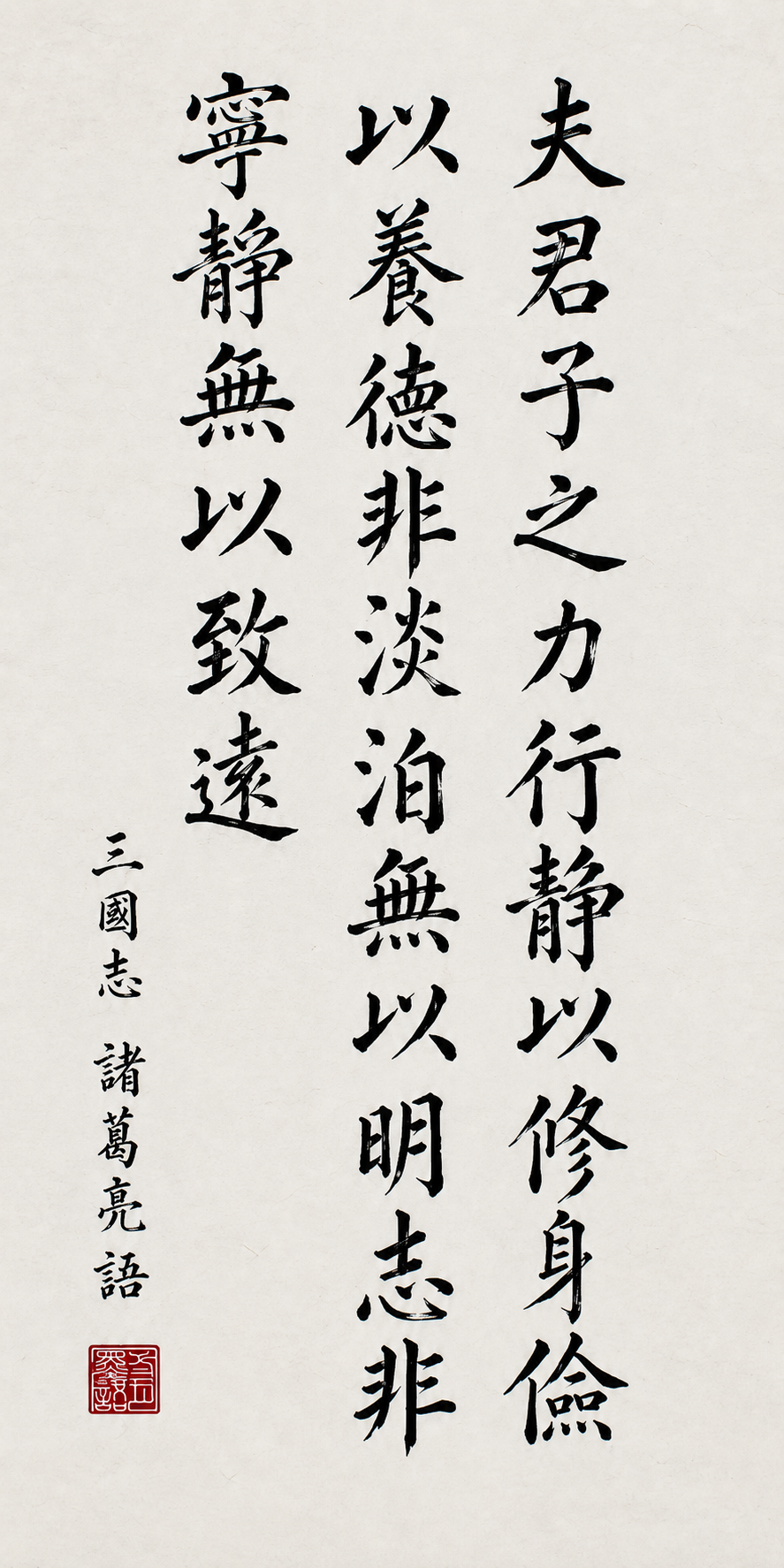
The phrase 寧靜 is often connected with the well-known line:
非寧靜無以致遠
Without inner quiet, one cannot reach far.
This line is traditionally associated with Zhuge Liang’s Letter to His Son — 誡子書. It suggests that quietness is not laziness or withdrawal. Rather, it is the condition that allows clear direction and long-term achievement.
This idea fits calligraphy beautifully.
Before the brush moves, the body must settle.
Before the stroke appears, the intention must become clear.
Before expression, there is preparation.
Calligraphy teaches us that reaching far often begins with becoming quiet.
Writing 寧靜 with the Brush
When writing 寧靜, the two characters should feel balanced.
寧 may feel more gathered and contained.
靜 may feel more refined and spacious.
Together, they create a calm rhythm.
The brush should not rush from one stroke to the next. There should be time to place the stroke, feel its weight, and release it naturally.
This does not mean writing slowly all the time. It means writing with awareness.
A slow stroke can still be empty if the mind is absent.
A faster stroke can still feel calm if the movement is clear.
The real question is not only whether the character looks correct.
The deeper question is:
Does it carry stillness?
寧靜 as a Practice for Modern Life
In daily life, silence is often rare.
Messages arrive.
Tasks pile up.
The mind moves quickly from one thing to another.
Calligraphy offers a different rhythm.
The paper waits.
The ink darkens.
The brush moves only when the hand is ready.
This is why a phrase like 寧靜 feels especially meaningful today. It reminds us that calm is not something we find only when life is easy. Calm is something we can return to through practice.
Even a few minutes of writing can become a pause.
A place to breathe.
A place to observe.
A place to begin again.
A Simple Practice with 寧靜
To practise 寧靜, begin with preparation rather than writing.
Place the paper in front of you.
Hold the brush gently.
Let the shoulder relax.
Take one quiet breath.
Then write the two characters slowly enough to notice the movement.
After writing, look at the result.
Does the writing feel tense or relaxed?
Does the spacing feel crowded or open?
Does the ink feel heavy or balanced?
Does the phrase feel calm?
This kind of reflection is part of the practice.
Calligraphy is not only about making beautiful characters. It is about learning to see more clearly.
Final Thought
寧靜 means peaceful stillness.
But in Chinese calligraphy, it becomes more than a phrase.
It becomes a way of practising calm through the body, the brush and the breath.
The hand settles.
The ink gathers.
The paper receives.
The stroke appears.
And in that quiet process, writing becomes more than words.
It becomes a return to stillness.
Sources & Further Reading
諸葛亮《誡子書》 (Zhūgě Liàng's Jiè Zǐ Shū Letter to His Son)
The Metropolitan Museum of Art — Chinese Calligraphy
National Gallery of Victoria — Three Perfections: Poetry, Calligraphy and Painting in Chinese Art
Smithsonian National Museum of Asian Art — China’s Calligraphic Arts
